the fireplace
Little House on the PrairieThe fireplace is the architectural and emotional center of the little house that Charles Ingalls builds for his family on the High Prairie. It is the first major interior structure Pa raises after the walls and door are complete, and its construction marks the moment the Ingalls' rough shelter becomes a true home. Throughout the novel, the fireplace is the fixed point around which the family's domestic life revolves: Ma cooks there, the girls warm themselves and play nearby, and the most significant scenes of family intimacy, crisis, and celebration unfold in its glow. It is both a practical necessity for survival on the prairie and a symbol of the settled, ordered life the Ingalls are trying to establish in a land still dominated by wilderness and Indians.
Construction and the Promise of Domesticity
Pa announces his intention to build the fireplace on the very night the door is finished, telling Ma, "Now, Caroline, I'm going to build you a fireplace. Then you can do your cooking inside the house." He notes that despite the sunny weather, the rains will eventually come, and Ma agrees that "Good weather always comes to an end, sooner or later." The fireplace is thus conceived not as a luxury but as a preparation for hardship, a way of securing the family against the elements they know will arrive.
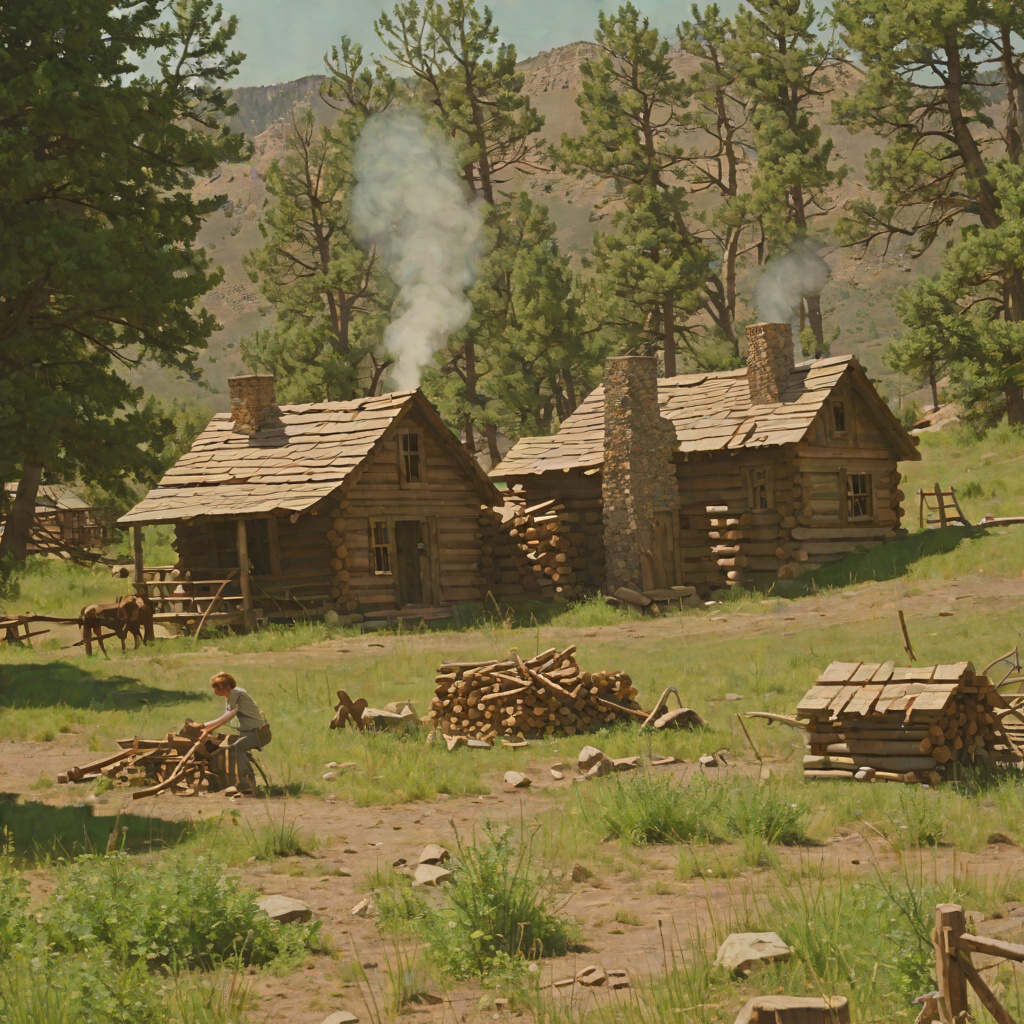
The construction itself is a meticulous, layered process that Pa undertakes with the same care he gave to the door. He first clears the grass in a square outside the house wall, then lays a row of rocks around the square. Mixing earth and water into a thick mud, he spreads it over the rocks and sets another row on top, building up the fireplace and chimney with alternating layers of rock and mud until they reach the height of the house wall. He finishes the top of the chimney with wood and mud, then goes inside and cuts a hole in the wall with his axe and saw. The result is a functioning fireplace built entirely from the materials of the prairie itself. The whole family stands and admires it, and Ma builds a little fire and cooks a prairie chicken for supper, the first meal eaten inside their own house. That evening Laura sits on her log chair, washed and brushed, using her knife and fork properly as Ma has taught her, and feels happy: "It was nice to be in a house again."
The Hearth as Stage for Family Life
The fireplace quickly becomes the gathering place for the family's most intimate moments. When the Ingalls fall ill with malaria, the fireplace is where Ma cooks and where the family huddles together in recovery. It is also the site of the novel's most cherished domestic ritual: Christmas morning. When Pa is away and the family fears Santa Claus cannot cross the roaring creek, Ma decides to hang the girls' stockings over the fireplace anyway, saying, "Perhaps something will happen." The fireplace is thus the designated place where the family's hopes are literally hung, and it is there that Laura and Mary find the shining tin cups and sticks of red and white candy that Mr Edwards has brought. The fireplace transforms the otherwise bleak Christmas into a moment of joy, and the tin cups become the girls' prized possessions, their very own cups to drink from.
The fireplace also serves as the family's gathering point during times of danger. When the Indian war-cry crisis intensifies and the family is confined indoors at night, Pa sits by the fireplace making bullets while Laura and Mary lie awake and watch him. When Mary asks why he is doing that, Pa answers, "Oh, I have nothing better to do," but Laura knows he is tired from working in the field and wants to sleep. The fireplace is thus the backdrop for Pa's quiet preparation for possible violence, a domestic scene charged with unspoken tension. It is also where the family's furs are dried and softened in the evenings, as Pa pulls the skins between his hands to make them soft, building the bundle he plans to trade in Independence.
The Fireplace and the Threat of the Wild
The fireplace is also the site where the wilderness intrudes most directly into the family's home. When the naked wild men first enter the house, they stand by the fireplace while Ma cooks over the fire and Baby Carrie hides her face in Ma's dress. Laura, terrified, runs toward Ma but smells the awful odor of the fresh skunk skins the Indians wear and hides behind the table, looking out at the wild men with one eye. The fireplace, the symbol of domestic safety, becomes the stage for the family's most frightening encounter with the Indians, who stand at the very heart of the home. The contrast is stark: the hearth that represents the Ingalls' claim to the land is also the place where that claim is most visibly challenged.
Later, as the Indian presence grows and the family's fear intensifies, the fireplace remains the family's refuge. Pa shuts the horses and cows in the stable and brings Jack into the house, and no one can go outdoors until morning. The family huddles inside, and the fireplace is where they gather, its warmth and light a fragile barrier against the wild noises and beating drums they hear at night. The fireplace thus embodies the family's precarious position: it is the center of their domestic order, but it cannot fully protect them from the forces gathering outside.
The Fireplace as Symbol of Home and Loss
When the family finally leaves the little house, the fireplace is one of the things they must abandon. The plough is the only thing they cannot take, but the fireplace, too, is left behind, a permanent fixture of the house they will never see again. The family's departure is marked by a quiet sadness, and Ma says gently, "A year gone, Charles," to which Pa answers with a smile, "What's a year? We have all the time in the world." The fireplace, which took so much labor to build and which anchored the family's life for that year, is simply left to the prairie, a monument to the home they made and lost. Its permanence contrasts with the family's transience, a reminder that even the most carefully built domesticity can be abandoned when the larger forces of history and government intervene.